
Achilles tendon pain and activity
Physiotherapy may help you plan walking, stairs and activity with tendon loading tailored to the symptom location and assessment. Home visits in Toronto and select GTA communities.
Book a Free Call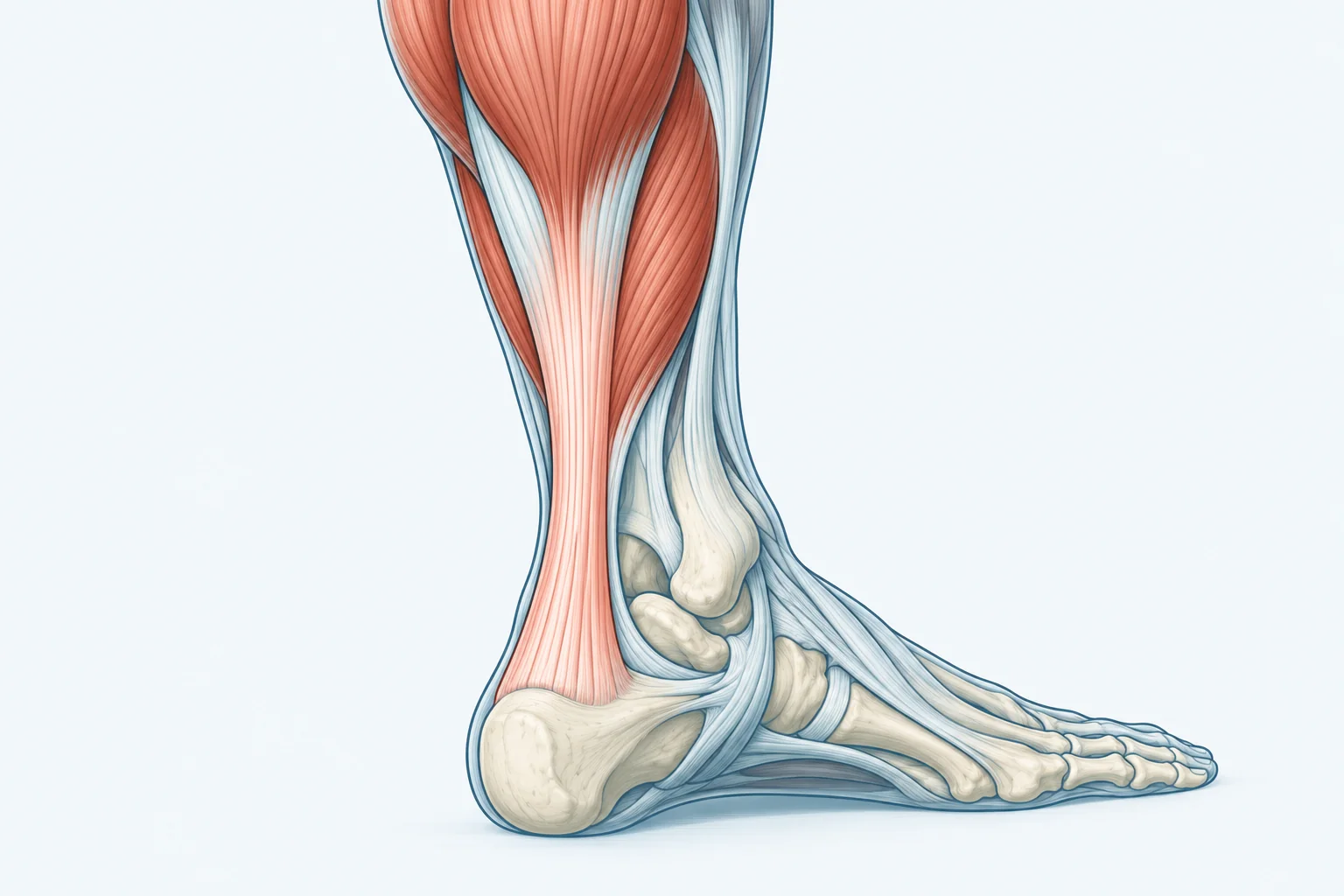
What Achilles tendinopathy describes
The Achilles tendon connects the calf muscles to the heel. Tendinopathy commonly causes pain and reduced capacity around the tendon, but not all pain at the back of the heel is an Achilles tendon condition. Other causes, including a sudden tendon rupture, need different care.
Location matters. Midportion symptoms occur higher along the tendon, while insertional symptoms are near where it attaches to the heel. The distinction can affect which movements or loading positions are comfortable, so a generic heel-drop instruction may not suit everyone.
Recovery and return to activity
Tendon recovery varies; this page cannot promise a timeline or return date. Follow-up can review walking, stairs, strength and the activities you hope to resume, then adjust loading in light of your response and clinical findings.
A temporary reduction or change in a demanding activity may help some people while capacity is rebuilt. Complete rest is not automatically required, and pushing through worsening symptoms is not a goal. Keep medical advice and any sport-specific restrictions in the plan.
Symptoms and walking limits
Pain or stiffness may be noticeable during walking, on stairs, after rest or with running and jumping. The tendon may feel tender or thickened, but these signs alone cannot identify severity. Some people have difficulty pushing off or increasing their usual walking distance.
Describe where symptoms are located, how they began, what activity changed and whether there was a sudden pop. Sudden loss of push-off or a significant pop can raise concern for rupture and needs urgent assessment rather than exercise testing.
Factors that may affect tendon symptoms
A change in running, hills, court sport, walking, work or recovery may be relevant. Health conditions, medications, prior tendon symptoms and training history can also matter. These factors do not prove that a single activity caused the problem or that the tendon is permanently damaged.
Footwear and surface may influence comfort for some tasks. Insertional symptoms can be sensitive to compression near the heel, so advice designed for midportion symptoms should not automatically be applied. Assessment helps distinguish location and consider other causes.
How individualized physiotherapy may help
An assessment may include symptom history, walking, ankle movement, calf strength and functional tasks. We would screen for a possible rupture or other medical concern and review any existing restrictions. If the presentation needs medical assessment first, loading should wait until that is clear.
When suitable, care may include education, activity planning and progressive tendon or calf loading adjusted to your symptoms and goals. Rest alone is not a complete plan for every person, but neither is a universal exercise routine. Position, load and progression are selected for the tendon location and response.
What a home visit can include
A home session can consider your stairs, footwear, indoor walking route and the demands of getting out for daily activities. We can discuss what you currently manage and identify a safe way to plan progression without requiring a gym or special equipment.
Virtual follow-up may be possible when appropriate and when you are physically in Ontario during the appointment.
When to seek medical attention
A sudden pop followed by loss of push-off, a gap in the tendon area or marked weakness raises concern for Achilles rupture and needs urgent medical assessment. Do not test the tendon repeatedly or assume a rupture is just soreness.
Prompt review is also appropriate for rapidly increasing swelling, severe pain, redness or fever, or symptoms after a significant injury. A free practice call is non-clinical and should not delay urgent assessment.
Questions about achilles tendinopathy
Is all pain behind the heel Achilles tendinopathy?
No. Several conditions can cause pain near the back of the heel. Assessment considers the location, onset and function.
Are midportion and insertional Achilles pain treated the same way?
Not always. The tendon location can affect comfort with loading positions, so an individualized assessment matters.
Should I do heel drops off a step?
That is not a universal instruction, particularly when symptoms are near the heel attachment. A clinician can help choose an appropriate loading approach.
Does complete rest fix tendon pain?
Rest alone is not a complete plan for everyone. When appropriate, gradual loading can be planned around symptoms and function.
What if I felt a pop and cannot push off?
Seek urgent medical assessment because this pattern can indicate tendon rupture. Do not wait for a routine physiotherapy booking call.
Further information
Discuss service fit and next steps
The free call covers area, availability, fees and booking. It is not an assessment, diagnosis or treatment session.