
Meniscus and knee ligament injuries
After appropriate injury assessment, physiotherapy may help you work on walking, turning and strength within your medical or surgical plan. Home visits in Toronto and select GTA communities.
Book a Free Call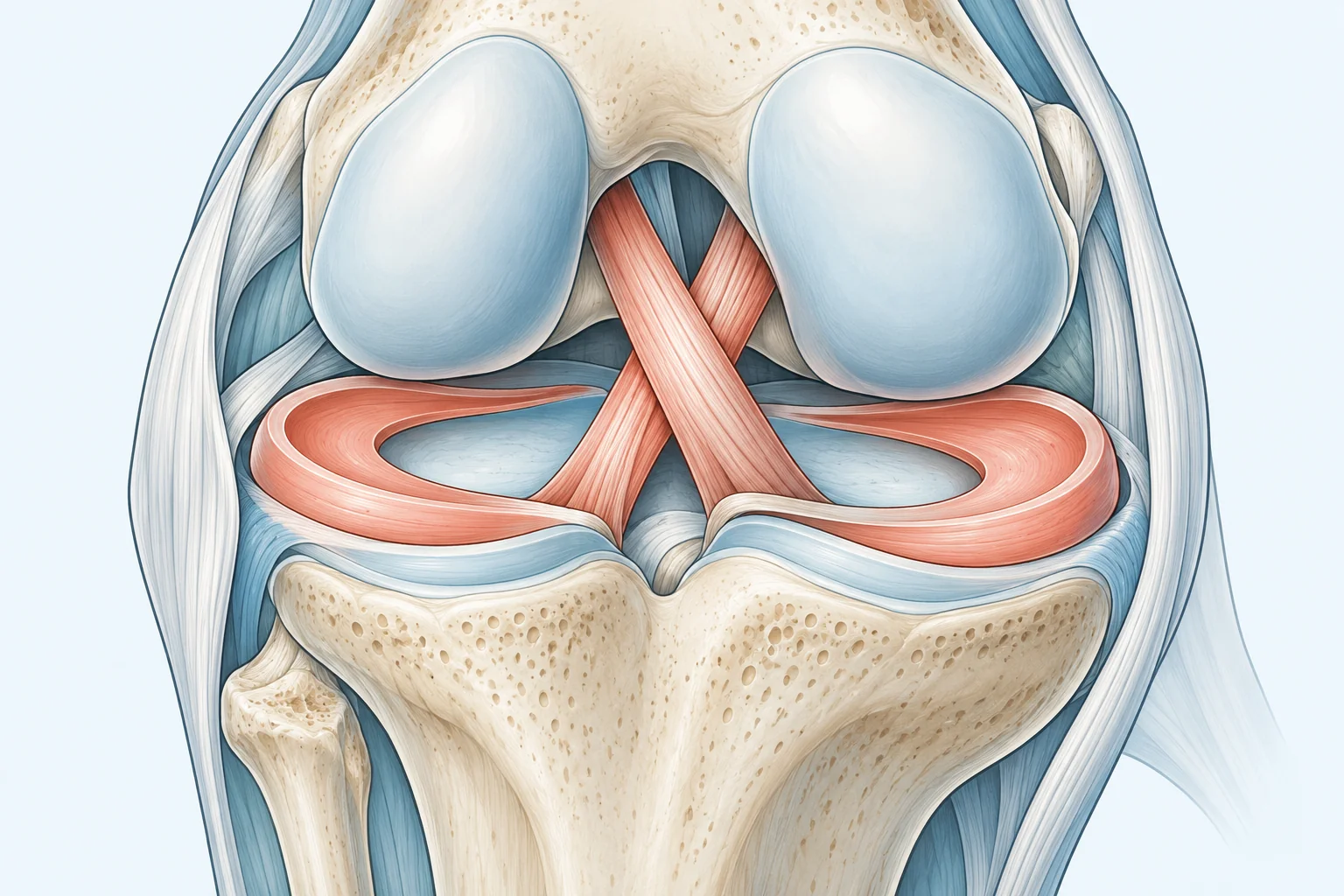
What meniscus and ligament injuries are
The menisci are cartilage structures within the knee that help distribute load. Ligaments connect bones and contribute to joint stability. A meniscus injury and a ligament sprain are different problems, although they can occur together and share symptoms such as pain or swelling.
An MRI finding does not always explain a person’s pain or mean surgery is required. At the same time, some acute displaced or potentially repairable injuries need timely specialist consideration. A scan, symptoms and examination must be interpreted together.
Recovery and follow-up
Recovery depends on the injury, any procedure, health and the demands you want to return to. There is no universal timeline or guarantee. Follow-up can review walking, swelling, range of motion and strength, then progress only within the relevant medical or surgical restrictions.
If the knee continues to lock, gives way, becomes more swollen or function changes unexpectedly, contact an appropriate medical clinician. Reassessment can clarify whether the current plan still fits or whether specialist input is needed.
Symptoms and activities that may be affected
After an injury, you may notice swelling, pain, reduced movement, difficulty walking, a giving-way feeling or trouble turning. Some people report catching. A truly locked knee, where movement is mechanically blocked, is different from stiffness and needs prompt assessment.
Tell us how the injury happened, when swelling appeared, whether you can bear weight and what advice or imaging you have received. Symptoms alone cannot identify which structure is injured or whether it needs a particular treatment.
Why injury patterns differ
A twist, collision, fall or sudden direction change may injure different knee structures. Prior injury, activity demands, swelling, joint movement and other health factors may influence function and recovery. Not every MRI-described tear is the cause of symptoms.
Whether surgery should be considered depends on injury features, goals, examination, medical advice and specialist assessment. Physiotherapy can be part of non-operative care or rehabilitation around surgery, but it does not replace specialist consideration when needed.
How individualized physiotherapy may help
An assessment may review swelling, comfortable movement, walking, strength and relevant tasks, while checking for signs that need medical referral. We would ask about true locking, instability, weight-bearing and any restrictions. A suspected fracture or serious acute injury should be assessed before ordinary exercise progression.
When suitable, rehabilitation may include education, gradual strength and movement work, and practice of tasks such as a chair transfer or stairs. The plan follows the injury and clinical instructions. After a repair or reconstruction, the surgeon’s protocol takes priority; no generic program can replace it.
What a home visit can address
A home appointment may consider how you move between rooms, use stairs, get out of a chair or manage a task relevant to your recovery. If you use a brace or walking aid, we can follow the instructions from your treating team and discuss safe use in your own setting.
Access and safe space at a condo or retirement residence are considered before a visit.
When prompt medical care is needed
A truly locked knee, major swelling after trauma, inability to bear weight, deformity or a hot, feverish joint needs prompt medical review. Severe injury, sudden major loss of function or a circulation or sensation change may require urgent or emergency care.
Do not wait for a free call if urgent symptoms are present. The practice call is non-clinical and is for service fit, location, availability, fees and booking.
Questions about meniscus and knee ligament injuries
Does an MRI meniscus tear always need surgery?
No. Imaging findings do not decide treatment by themselves. Some injuries may be managed without surgery, while selected acute injuries need timely specialist consideration.
Is a meniscus injury the same as a ligament sprain?
No. They involve different structures, though they can occur together. Assessment considers the injury pattern and function.
Can physiotherapy replace surgery?
Not in every case. Physiotherapy may be part of non-operative care or post-surgical rehabilitation, but specialist advice is important when an injury may need surgery.
What does a locked knee mean?
A true mechanical block to movement needs prompt medical assessment. Stiffness alone may feel different, but a clinician should assess new loss of movement.
Can home rehabilitation follow knee surgery?
It may be possible, with care following the surgeon’s restrictions and rehabilitation protocol. The specific plan must be confirmed with your treating team.
Further information
Discuss service fit and next steps
The free call covers area, availability, fees and booking. It is not an assessment, diagnosis or treatment session.