
Upper and mid-back pain
Physiotherapy may help you plan reaching, lifting and comfortable movement after an assessment of your symptoms and health. Home visits in Toronto and select GTA communities.
Book a Free Call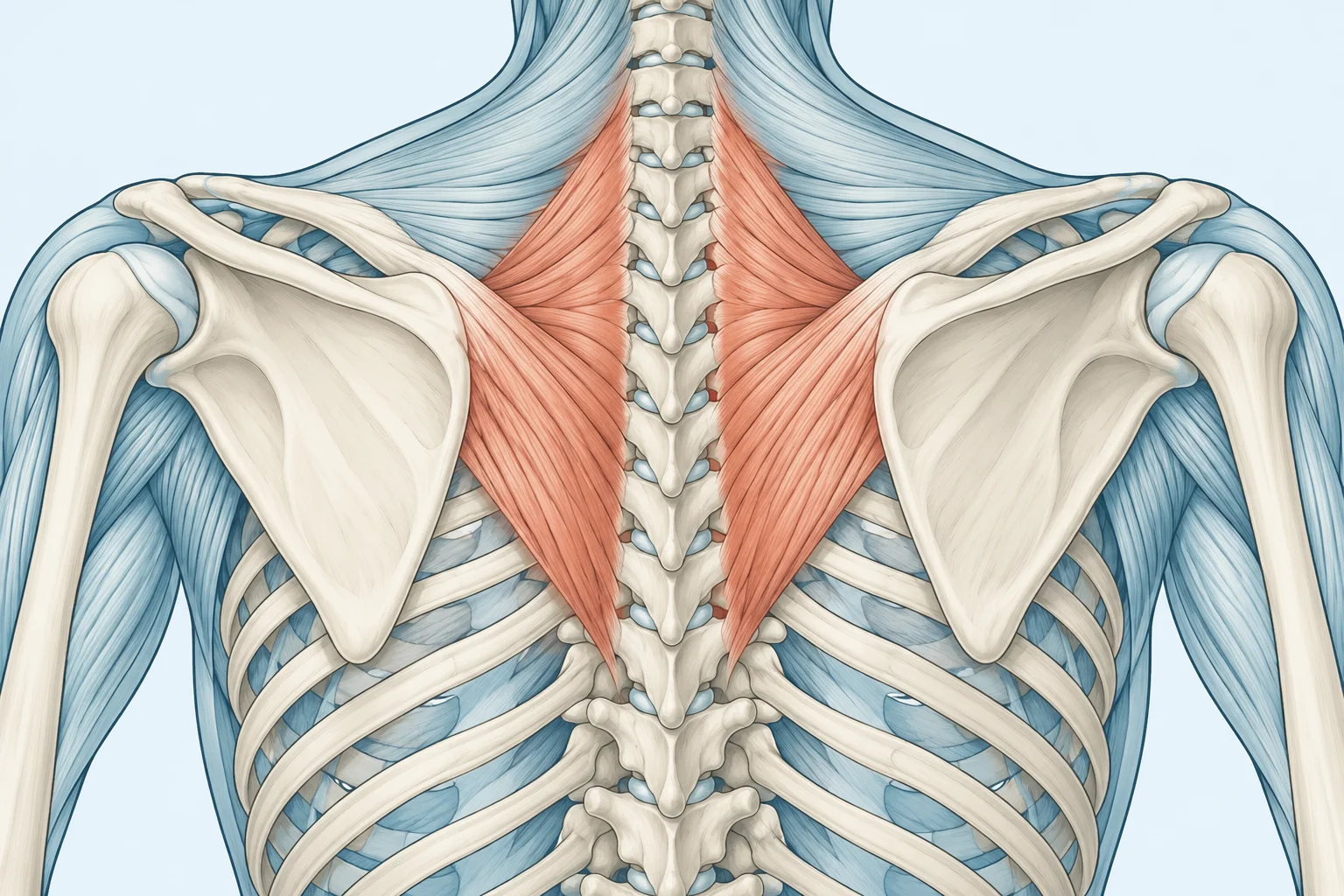
What upper or mid-back pain describes
“Upper back” and “mid-back” describe symptoms around the thoracic region, between the neck and lower back. Pain may be near the spine, shoulder blades or ribs; location alone does not identify a diagnosis.
Guidance for low-back symptoms does not automatically apply to the upper or mid-back. Assessment considers your history and whether another medical issue may be involved; care is selected for your needs rather than assumed to be the same for everyone.
When to seek medical help
Chest pain, breathlessness, collapse or sudden severe symptoms require emergency assessment. Fever, systemic illness, unexplained weight loss, significant trauma or new neurological changes need prompt medical review.
A free practice call is only for service fit, availability, fees and booking. It is not an assessment or a route for urgent triage.
Symptoms and daily activities
Turning, reaching, carrying, sitting or changing position may be uncomfortable. Symptoms may be local or spread around the ribs. Difficulty breathing, chest symptoms or feeling faint require medical attention.
Talk about the activities you avoid or modify, how symptoms change with rest or movement, and any recent trauma, illness or unexplained systemic symptoms. Whether you can sleep, dress, work at a desk, reach a cupboard or lift a household item can help make an assessment relevant to your life.
Possible influences and uncertainty
A change in lifting, reaching, sport or workstation time may coincide with symptoms, but does not prove a cause. Health conditions, injury, stress, sleep and activity may also matter.
A rounded posture, stiff joint or weak muscle should not be treated as the explanation for every person. A clinician may assess movement and strength, but findings are considered with your symptoms, medical history and function. Persistent or systemic symptoms may need medical review rather than an exercise-only response.
How individualized physiotherapy may help
We would first ask when symptoms began, how they behave, whether breathing or exertion changes them, and whether you have had trauma, fever, unexplained weight change or other concerning features. The assessment may include comfortable trunk, shoulder and neck movement, strength, function and a discussion of your goals. The examination is adjusted to your comfort.
When physiotherapy is appropriate, a plan may include education, gradual mobility or strengthening, practice of reaching or carrying, and activity planning. Manual therapy may be considered as an optional adjunct, not a required treatment. The focus is on tasks you want to manage and on how symptoms respond, not on forcing a specific posture or claiming that one alignment change will cure pain.
What an in-home visit can consider
The home setting can help discuss a task that matters to you such as reaching a shelf, sitting for a meal, turning to look behind you or carrying light household items, if safe and relevant. The visit can use the space and furniture already available; you do not need a special treatment room or exercise equipment.
Virtual care may be an option when suitable and when the person is physically in Ontario during the appointment.
Recovery and next steps
Upper-back symptoms do not have one predictable course. Progress depends on the underlying issue, health, activity and how symptoms change. A clinician should not offer a guaranteed outcome or a fixed recovery date from a website description. Follow-up can review comfort with the tasks you selected and revise the plan if new information appears.
If symptoms remain unexplained, worsen, recur with exertion or do not fit a musculoskeletal pattern, medical assessment may be appropriate. Physiotherapy can complement medical care when indicated; it does not replace investigation of chest, breathing, systemic or neurological symptoms.
Questions about upper and mid-back pain
Is pain between my shoulder blades always a posture problem?
No. Posture is not a universal cause. Assessment considers your health, symptoms and tasks, and may identify several influences or no single clear trigger.
Can upper-back pain be related to my ribs?
The area includes the rib cage, but symptoms can have different explanations. Breathing difficulty or chest symptoms need medical assessment rather than an assumption that the problem is muscular.
What if I have chest symptoms as well as back pain?
Chest pain, shortness of breath or feeling faint needs emergency assessment. Do not assume chest symptoms are caused by the back.
Can a home physiotherapy visit include reaching or carrying practice?
It may, when the task is relevant and safe to assess. The visit is planned around your goals and available home setup.
When is upper-back pain an emergency?
Chest pain, breathlessness, collapse or sudden severe symptoms require emergency assessment. Fever, systemic illness, trauma or new neurological changes also warrant prompt medical review.
Further information
Discuss service fit and next steps
The free call covers area, availability, fees and booking. It is not an assessment, diagnosis or treatment session.