
Wrist and thumb pain with everyday use
Home physiotherapy may help you plan gripping, writing or other hand tasks after an appropriate assessment of symptoms and restrictions. Home visits in Toronto and select GTA communities.
Book a Free Call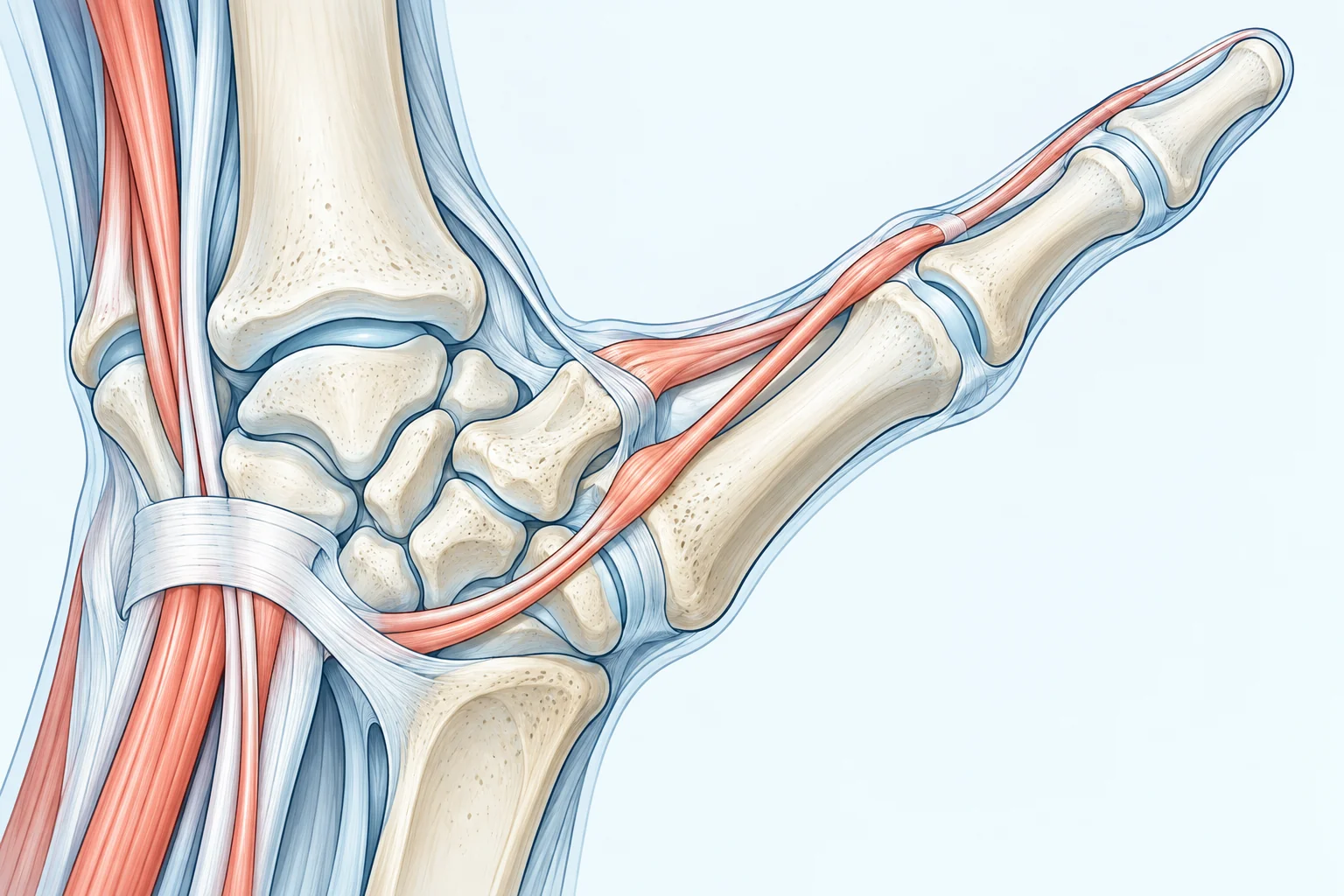
What wrist and thumb pain can describe
Pain may be near the thumb base, wrist or palm. A ligament sprain, fracture, tendon irritation or joint condition can overlap; location alone cannot identify the cause.
Thumb-side wrist pain after a fall can occur with a scaphoid fracture. A normal first X-ray does not always rule one out. Persistent pain needs medical reassessment; follow restrictions rather than assuming a simple sprain.
Recovery and protecting an injured wrist
Recovery depends on the injury. Follow splint, loading and follow-up instructions from the clinician managing your care, and contact them if symptoms change or instructions are unclear.
When restrictions are clear, physiotherapy may plan a gradual return to hand tasks. Do not increase loading or remove a prescribed support without appropriate advice.
Symptoms and hand tasks
Pinching, gripping, lifting a pan, opening a jar, typing, writing or using a phone may hurt. Injury can cause swelling, bruising, reduced movement or thumb looseness. Numbness, colour or temperature change, deformity or rapidly increasing swelling needs prompt attention.
When you seek assessment, explain whether there was a fall, direct impact or gradual onset; what tasks are affected; and whether pain is improving or persisting. Mention any imaging, splint, cast, surgery or weight-bearing restrictions already provided by another clinician.
Possible causes and safety considerations
A sprain is a ligament injury; a fracture is a break in bone. Symptoms overlap but care differs. Thumb instability may require specialist assessment, so do not assume every wrist problem is a tendon issue suitable for exercise.
Repeated hand tasks or a change in load may be relevant for gradual symptoms, but neither grip style nor one wrist position explains all pain. Fracture risk, prior injury, arthritis, nerve symptoms and other health conditions are considered before planning loading or movement.
How individualized physiotherapy may help
An assessment may review the injury mechanism, swelling, comfortable wrist and thumb movement, grip or pinch function where safe, sensation and any restrictions from a physician or surgeon. We would check whether a fracture or unstable injury needs medical review before exercise. Physiotherapy should not override a splint, cast or surgical protocol.
When the injury is suitable for physiotherapy, care may include education, gradual movement, strength or dexterity work, and practice of tasks such as writing or light carrying. Loading is adapted to healing stage and the instructions from the treating medical team. A brace or splint may be relevant, but choices and timing are not universal.
When medical review is important
Persistent thumb-side wrist pain after a fall needs reassessment even if the first X-ray was normal. Suspected fracture, instability, deformity, severe swelling, worsening pain or numbness also needs prompt medical review. Serious injury or loss of circulation or sensation requires emergency care.
If a fracture or significant ligament injury is possible, medical assessment takes priority over a home exercise plan. A non-clinical free call is not a triage service and must not delay care.
Questions about wrist and thumb pain
Can a wrist fracture be missed on an early X-ray?
Some scaphoid fractures may not be visible on initial X-rays. Persistent thumb-side wrist pain after a fall should be reassessed by an appropriate medical clinician.
Should I remove my splint to exercise?
Follow the instructions from the clinician who prescribed the splint or cast. A physiotherapy plan should respect those restrictions and should not replace the treating team’s advice.
Does thumb pain always mean a sprain?
No. Fractures, ligament injuries, tendon problems and other conditions can overlap in symptoms. Assessment is needed, especially after trauma or when the thumb feels unstable.
When should I seek urgent care?
Seek prompt review for a suspected fracture, significant swelling, deformity, instability or new numbness. Serious trauma or loss of circulation or sensation requires emergency care.
Can physiotherapy help with daily hand tasks?
When the injury is suitable and medical restrictions are clear, care may include graded practice for tasks such as gripping, dressing or meal preparation.
Further information
Discuss service fit and next steps
The free call covers area, availability, fees and booking. It is not an assessment, diagnosis or treatment session.