
Patellar tendon pain below the kneecap
Physiotherapy may help you plan running, jumping or stair activity with progressive loading tailored to your symptoms and goals. Home visits in Toronto and select GTA communities.
Book a Free Call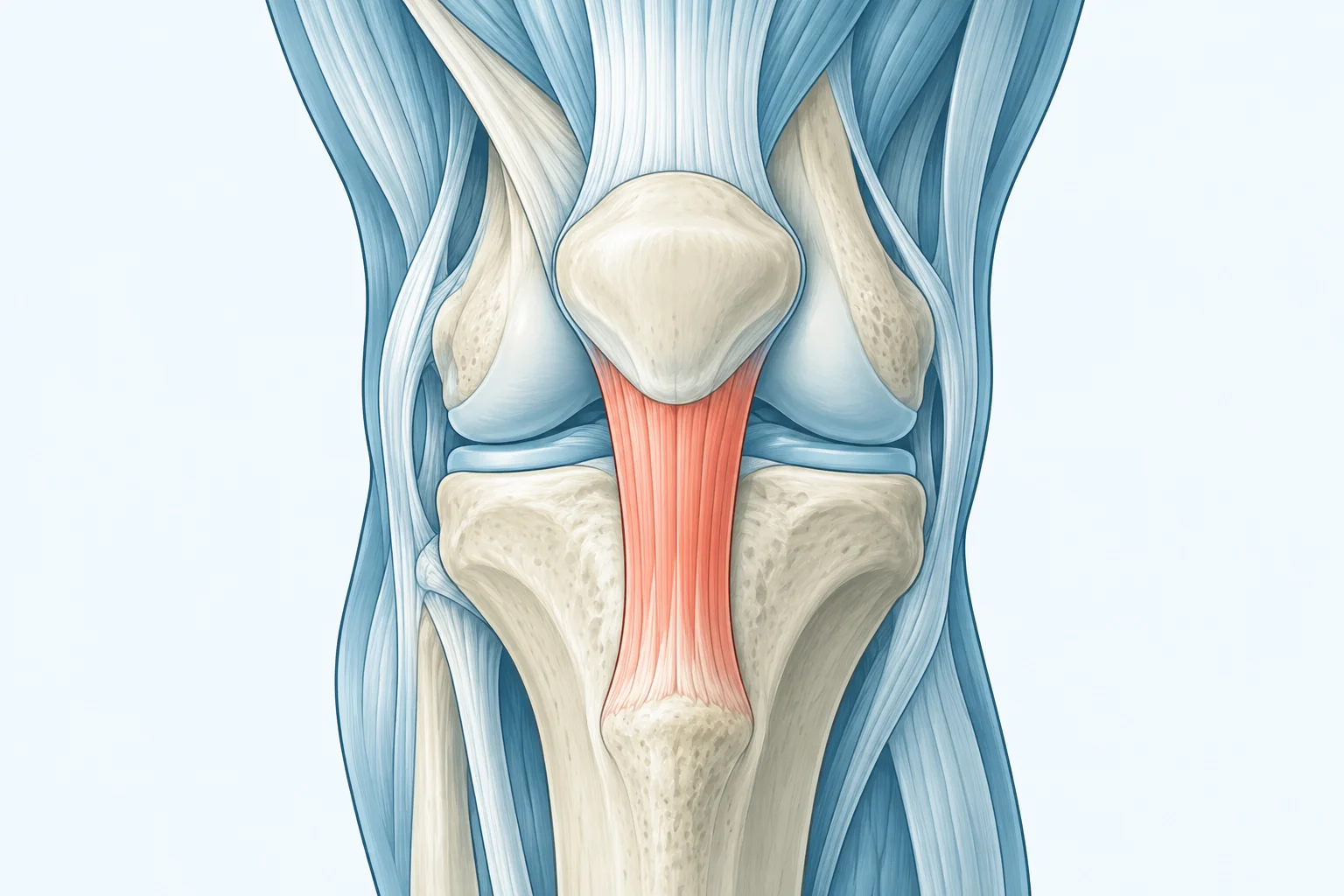
What patellar tendinopathy describes
The patellar tendon connects the kneecap to the shin bone. Tendinopathy often involves focal pain near the tendon, commonly below the kneecap, with activities that load it. The term does not prove a tear or identify every cause of pain in the front of the knee.
Diffuse pain around or behind the kneecap may fit a different pattern such as patellofemoral pain. Knee arthritis, injury, referred symptoms and other causes also need consideration. Assessment pays attention to the exact location and what tasks bring on symptoms.
Symptoms and activity changes
Running, jumping, landing, squatting or repeated stairs may be uncomfortable. Symptoms can change during an activity or later in the day. A recent increase in training or a change in sport demands may be relevant, but does not confirm a tendon diagnosis.
Tell us what movements cause focal pain, whether there was a sudden injury and what sport or work tasks matter to you. Sudden inability to actively straighten the knee after injury is different from gradual tendon pain and needs urgent assessment.
What can influence tendon load
Tendons respond to the demands placed on them, but symptoms are not explained by one weakness or a single faulty jump. Training volume, intensity, recovery, prior symptoms, health and other activity can all affect how the knee responds.
Reducing every activity indefinitely is not automatically necessary, while continuing the same demanding load may not be manageable. A plan considers your current capacity and goals and changes activity in a way that can be reviewed over time.
Recovery and return to sport
Tendon symptoms and sport capacity change at different rates. No fixed return date or result can be promised. Follow-up can review pain, strength and the sport tasks you want to resume, then adjust loading and training in light of your response.
A progressive plan may consider practice, competition and recovery days without assuming the same schedule suits everyone. If pain becomes more severe, swelling develops or your knee suddenly loses function, stop and seek appropriate medical advice.
How individualized physiotherapy may help
Assessment may include the symptom history, knee movement, strength, a safe squat or step and your sport or work tasks. We would check whether the pain pattern is consistent with tendon symptoms or whether injury, patellofemoral pain or another condition needs attention first.
When suitable, physiotherapy may include education, sport-load planning and progressive strengthening. Loading can be adjusted to your irritability, current ability and goals; it is not limited to one eccentric exercise method. The response and relevant demands help guide progression.
A home visit for stairs and movement
A home visit can relate the assessment to a safe step, chair rise, household stairs or walking route. We can discuss how these tasks compare with your sport or daily demands and practice only what is appropriate for your current assessment.
Home, condo or retirement-residence visits also depend on safe access and your needs.
When to seek medical assessment
A sudden injury followed by inability to actively straighten the knee or lift the leg straight needs urgent medical assessment. Major swelling, a visible deformity, inability to bear weight or a hot joint with fever also needs prompt review.
If symptoms are not clearly related to loading or are rapidly changing, seek advice from an appropriate clinician. A free practice call is non-clinical and must not delay assessment of a serious injury.
Questions about patellar tendinopathy
Is pain below the kneecap the same as runner’s knee?
Not necessarily. Focal tendon pain below the kneecap differs from more diffuse pain around or behind the kneecap, though assessment is needed to distinguish causes.
Do I have to do eccentric exercises?
No single exercise method is required for everyone. Loading should be selected and progressed for your assessment and response.
Should I stop all jumping or running?
Not automatically. A clinician can help adjust sport load and plan a gradual return based on your current capacity.
Can a home appointment include step or squat practice?
It may, when the task is safe and relevant. The visit can use your home stairs or available space.
When is sudden knee weakness urgent?
Inability to actively straighten the knee after an injury needs urgent medical assessment, especially with swelling or inability to bear weight.
Further information
Discuss service fit and next steps
The free call covers area, availability, fees and booking. It is not an assessment, diagnosis or treatment session.