
Plantar heel pain and first steps
Physiotherapy may help you plan morning steps, walking and standing with assessment and activity or exercise choices suited to your symptoms. Home visits in Toronto and select GTA communities.
Book a Free Call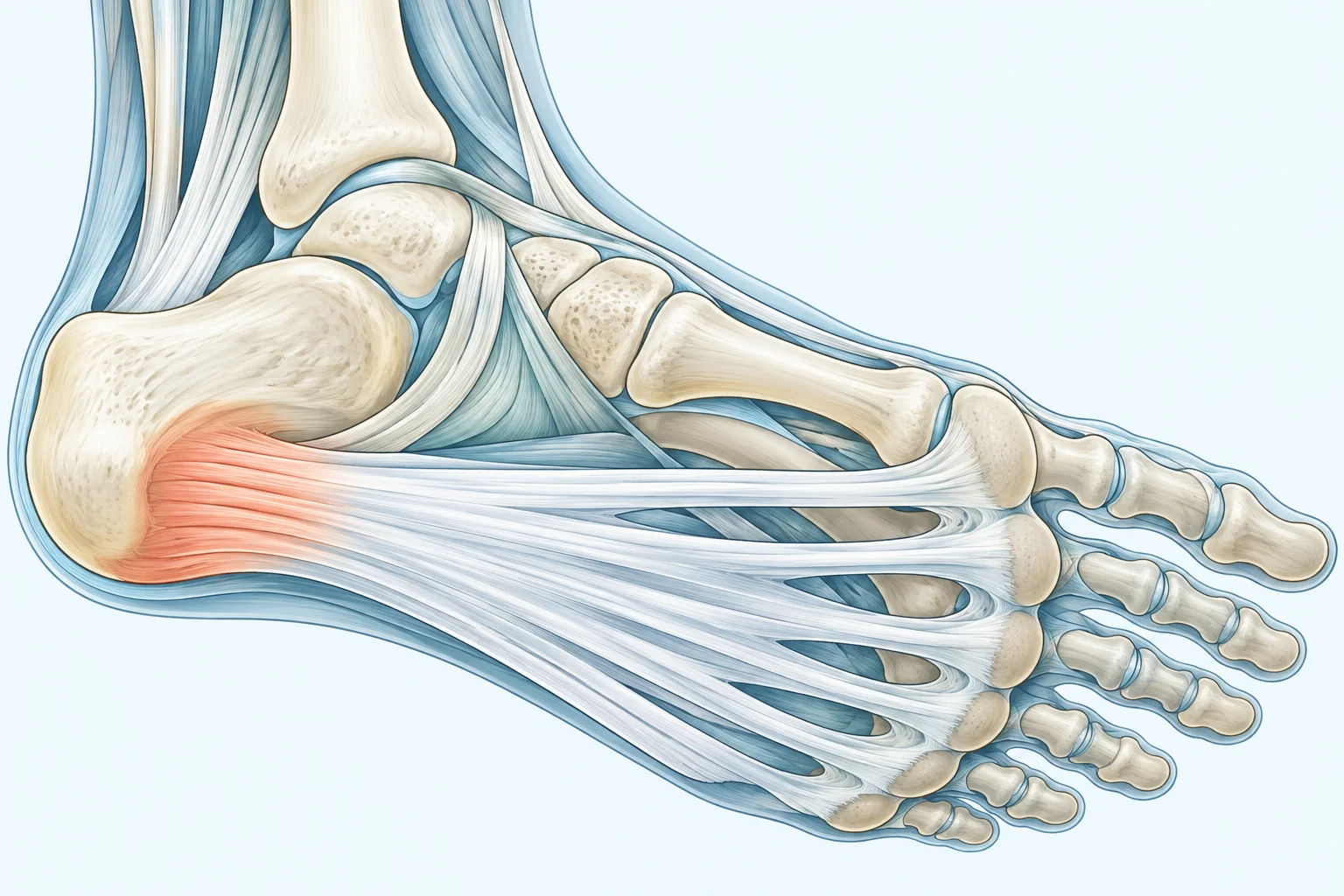
What plantar heel pain describes
Plantar heel pain is discomfort on the underside of the heel or nearby foot. Plantar fasciitis is a commonly used term, although the condition is not simply ongoing inflammation and not all heel pain comes from the plantar fascia. Other structures or health issues can cause similar symptoms.
A heel spur on an image does not necessarily explain pain. Assessment considers the location, onset, activity pattern, health and examination rather than assuming a spur is the source or that one treatment is required.
Recovery and returning to activity
Heel pain can improve at different rates, and a website cannot set a recovery date or promise an outcome. Follow-up can review your walking, standing, work or sport goals and adapt the plan if symptoms or function change.
Complete rest is not automatically necessary, and continuing every activity unchanged is not always comfortable. A tailored plan can consider how to balance loading and recovery. If symptoms are not following the expected pattern, reassessment can help decide whether another cause should be considered.
Symptoms and weight-bearing tasks
Some people notice pain with the first steps after sleep or sitting, then again after prolonged standing or walking. Others have a different pattern. Discomfort may affect household walking, work, stairs or sport, and footwear can feel more or less comfortable.
Tell us whether symptoms started gradually or after an event, where the pain is located, whether there is swelling or numbness and what distance you can walk. A sudden inability to bear weight or marked swelling after trauma needs medical review.
Why heel symptoms need context
A recent increase in walking, running or standing may be relevant, but it does not prove a single cause. Training changes, footwear, work surfaces, recovery, bone health, nerve symptoms and other conditions may also matter.
Heel symptoms can come from plantar fascia, Achilles tendon, nerve or bone-stress problems, among other causes. Pain at a particular spot can guide an assessment but does not establish a diagnosis. Focal bony pain after a loading increase may need medical evaluation before exercise is progressed.
How individualized physiotherapy may help
Assessment may include your activity and health history, foot and ankle movement, strength, walking and the pattern of pain. We would consider whether the presentation fits plantar heel pain or whether another cause needs medical assessment. The plan depends on your goals and the findings.
If suitable, physiotherapy may include education, tailored foot or calf strengthening, mobility work, and changes to walking or standing loads. Stretching, taping or a support may be considered for selected needs, but orthotics are not mandatory for everyone. Any progression depends on your response.
A home visit for morning steps and standing
A home visit can discuss the first steps you take in the morning, how you move around the home and the standing tasks that matter to you. If a task is safe to assess, we can relate it to footwear, walking distance or pacing options in your actual environment.
Condo and retirement-residence appointments depend on access and your needs.
When medical assessment is important
Seek prompt medical advice for traumatic inability to bear weight, marked swelling, signs of infection such as spreading redness or fever, or persistent numbness. Sudden severe pain or rapidly worsening symptoms also need assessment. Focal bone pain after a change in loading may need review before exercise.
Chest pain, breathlessness, a cold or discoloured foot, or sudden loss of sensation can need emergency care. A free call is for service fit, availability, fees and booking, not a clinical assessment or urgent triage.
Questions about plantar fasciitis and plantar heel pain
Is every heel pain plantar fasciitis?
No. Achilles tendon, nerve, bone-stress and other causes can produce heel symptoms. Assessment helps decide what needs to be considered.
Does a heel spur mean it is causing my pain?
Not necessarily. Imaging findings do not always explain symptoms; they need to be interpreted alongside your history and examination.
Do I need orthotics?
Not everyone does. Footwear or supports may be discussed for a particular situation, but they are not a universal requirement.
Can I walk while my heel hurts?
That depends on the cause and your symptoms. A clinician can help plan manageable activity; traumatic inability to bear weight or focal bone pain needs medical review.
Can a home visit look at my first steps?
If safe and relevant, the visit can discuss morning movement and household walking in your own setting.
Further information
Discuss service fit and next steps
The free call covers area, availability, fees and booking. It is not an assessment, diagnosis or treatment session.