
Sciatica and pain travelling down the leg
Physiotherapy may help you plan walking, sitting and activity around leg symptoms, guided by assessment and your goals. Home visits in Toronto and select GTA communities.
Book a Free Call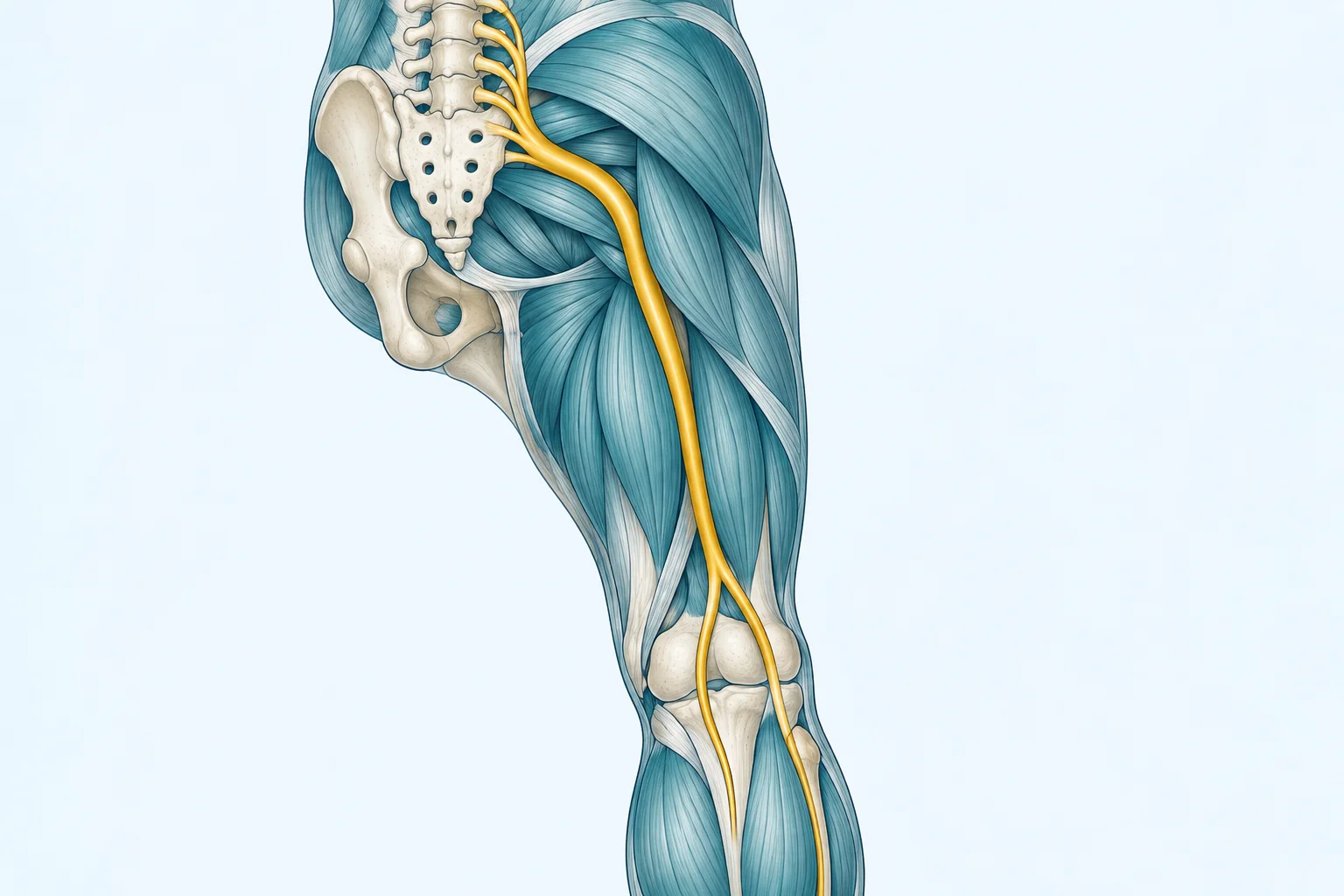
What sciatica describes
Sciatica is commonly used for symptoms associated with irritation or compression of nerve roots contributing to the sciatic nerve. Pain may travel through a buttock and down a leg, sometimes with tingling, numbness or weakness. The pattern varies and the term does not explain why symptoms began.
Sciatica is not synonymous with a disc herniation. Disc changes are one possible contributor, but symptoms alone cannot confirm the label. Referred leg pain can feel similar without being nerve-root sciatica; assessment considers alternatives.
When urgent assessment is needed
Seek emergency assessment for new difficulty starting urination or inability to pass urine, a new loss of bladder or bowel control, numbness around the saddle area (the inner thighs, genitals or skin around the anus), or rapidly worsening neurological symptoms. Progressive leg weakness or new foot drop needs prompt medical review. Sudden major weakness, symptoms in both legs or severe symptoms after trauma also need urgent assessment.
If you are unsure whether a symptom is urgent, contact emergency services or a medical clinician for advice. A free call with the practice is not a clinical assessment and should not delay urgent care.
How radiating symptoms may affect function
Pain may feel burning, sharp, aching or electric, and may be accompanied by pins and needles or an area of reduced sensation. Sitting, walking, coughing or a particular movement may change the symptoms, but there is no single symptom pattern that proves the cause.
Everyday effects can include difficulty walking a usual distance, getting comfortable in bed, sitting at a desk, climbing stairs or managing household tasks. New weakness, changes in foot control or numbness should be described clearly. Symptoms in both legs or rapidly changing neurological function need prompt attention.
What may contribute
Nerve-root symptoms can occur with spinal or other conditions. A disc may be involved, but scan findings need to fit the clinical picture. Recent illness, injury, surgery, health conditions or bladder, bowel or sensation changes may change the assessment needed.
Sleep, stress, activity and time in positions may influence symptoms. This does not mean symptoms are imagined or that a posture caused them. Assessment helps understand the pattern and choose a safe next step.
How individualized physiotherapy may help
Assessment may cover symptom history, health, walking, comfortable movement, strength and sensation. We would ask which tasks matter and screen for changes needing medical review. If further investigation is needed, We can recommend an appropriate next step.
When physiotherapy is suitable, care may include education, activity planning, repeated review of symptoms and exercises selected for your function. Loading and movement are adjusted to your response. There is no single exercise or nerve “release” that fits everyone, and manual techniques are optional adjuncts rather than a necessary treatment or cure.
What a home visit can address
A home visit may be useful when symptoms make travel difficult or when goals involve movement in your home. We can discuss walking indoors, stairs, getting out of a chair, bed movement or a manageable exercise space, if those tasks are safe to assess. The session is planned around your current abilities; it does not require special equipment or a gym.
Virtual care may be suitable for some people, but you must be physically in Ontario during the appointment.
Recovery and follow-up
Radiating leg symptoms can change over time, but recovery varies. A clinician should not promise a fixed timeline or assume that one treatment will remove symptoms. Follow-up can review walking, sleep, strength, sensation and the activities you are trying to resume, then adjust the plan or discuss medical assessment if the pattern changes.
Keep any instructions from your physician or other treating clinician, particularly after an injury, procedure or concerning neurological change. If the plan is not helping, symptoms become more widespread, or you develop new weakness or numbness, contact an appropriate clinician rather than simply increasing exercise.
Questions about sciatica and radiating leg pain
Is all pain that travels into my leg sciatica?
No. Several conditions can refer symptoms into a leg. Sciatica describes a nerve-related pattern and requires clinical assessment; the term is not interchangeable with every kind of radiating or referred pain.
Does sciatica always mean a disc herniation?
No. A disc can be one possible contributor, but sciatica is not a synonym for a disc herniation. Symptoms, examination and medical history are considered together.
Do I need imaging?
Imaging is not routine for every presentation. A medical clinician considers it when results could change care or when another cause needs investigation.
Can I keep walking or exercising?
Activity is individualized. A physiotherapist can help identify tolerable movement and adjust it if symptoms or neurological signs change. Do not use a general exercise plan in place of urgent assessment for warning signs.
Which back or leg symptoms need emergency care?
New difficulty starting urination or inability to pass urine, new bladder or bowel control changes, numbness around the inner thighs, genitals or anus, or rapidly worsening neurological symptoms need emergency assessment. Progressive weakness or foot drop needs prompt medical review.
Further information
Discuss service fit and next steps
The free call covers area, availability, fees and booking. It is not an assessment, diagnosis or treatment session.