
Foot and toe pain with everyday movement
Physiotherapy may help you plan walking and push-off through assessment of foot movement, strength, footwear and activity. Home visits in Toronto and select GTA communities.
Book a Free Call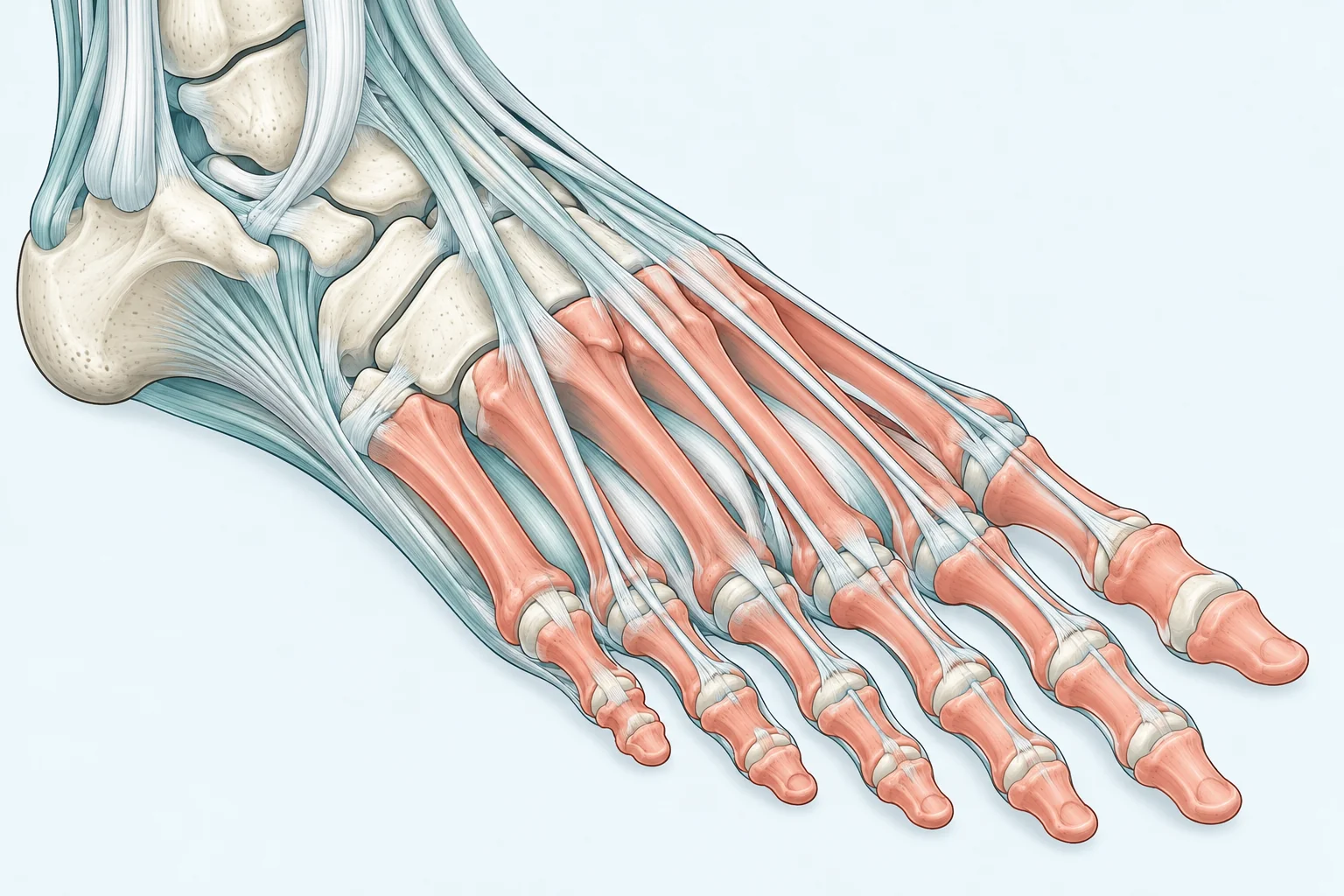
What foot and toe pain can describe
Foot and toe symptoms include pain in the forefoot, sole, joints or toes. This page focuses on concerns beyond plantar heel and ankle symptoms; pain can arise from several tissues and medical conditions rather than one tendon diagnosis.
A clinician may consider joint irritation, footwear pressure, nerve symptoms, inflammatory conditions, injury or bone-stress problems. The location helps guide questions but does not establish a diagnosis or determine whether loading is safe.
Recovery and returning to walking
Recovery depends on the cause, health and activity demands. There is no single timeline or guaranteed outcome for all foot pain. Follow-up can review walking comfort, footwear, activity and any changes in symptoms, then adjust the plan or recommend medical review.
If a fracture, inflammatory condition or wound is being managed, follow the relevant clinician’s instructions. A gradual increase in walking may be appropriate for some concerns, but focal bony pain or increasing swelling should not simply be exercised through.
Symptoms and daily function
Pain can affect standing, walking, stairs, fitting into shoes or pushing off the toes. You may notice tingling, numbness, swelling, stiffness, skin changes or focal tenderness. Symptoms after a change in activity or footwear may be relevant, but there can be other explanations.
Describe where symptoms are located, whether they started after an injury or gradually, and what distance or surface changes them. Mention diabetes, circulation concerns, inflammatory conditions, wounds or any clinician instructions, since these can affect the next step.
Possible contributors and other causes
Walking or running volume, prolonged standing, shoe shape, prior injury and joint health may influence foot comfort. Focal pain over a bone after a loading increase may raise concern for a stress injury and should be medically assessed before loading is progressed.
Nerve irritation, inflammatory joint problems, infection or circulation changes can also affect the foot. A hot swollen joint, skin wound or sudden sensory change needs prompt attention. Footwear or movement advice should not obscure symptoms that need medical investigation.
How individualized physiotherapy may help
Assessment may consider your medical and activity history, foot and ankle movement, strength, walking and footwear comfort. We would ask about focal bone pain, numbness, swelling, skin changes and whether an injury or another clinician has set restrictions.
When suitable, physiotherapy may include education, individualized strength or mobility work, walking or push-off practice, and a plan for changing activity. The plan depends on the suspected cause and your response. Exercise should not be used to test a possible fracture or delay review of infection or circulation concerns.
A home visit for footwear and walking tasks
A home appointment can discuss the footwear you use, walking around your rooms and the surfaces or daily tasks that matter. We can review a safe route or a manageable activity, without assuming barefoot walking or a particular shoe is right for everyone.
A virtual visit may be considered when appropriate, with the patient physically in Ontario during the appointment.
When to seek medical attention
Focal bony pain after increased activity may need medical evaluation before loading. Wound infection signs or isolated new calf swelling need prompt medical assessment. A suddenly cold, blue or discoloured limb with loss of circulation or sensation, or rapidly escalating severe pain, needs emergency assessment.
Chest pain or breathlessness also needs emergency care. A free practice call is non-clinical and should not delay medical assessment.
Questions about foot and toe pain
Is pain in the ball of my foot one specific condition?
No. Several joint, bone, nerve or soft-tissue problems can cause forefoot pain. Assessment and medical history help guide the next step.
Could focal foot pain be a stress fracture?
It is one possibility, particularly with focal bone pain after increased loading. Medical assessment may be needed before progressing exercise.
Should I change my shoes?
Footwear can affect comfort, but no one shoe is right for everyone. Discuss your current shoes, tasks and symptoms during an assessment.
Can physiotherapy assess toe or push-off movement?
If suitable, a visit may consider foot and toe movement and safe walking tasks. Suspected fracture, infection or circulation problems need medical review first.
When is a swollen toe urgent?
A hot swollen joint, wound infection signs or isolated new calf swelling need prompt assessment. A cold, blue or discoloured foot with circulation or sensation loss, rapidly escalating severe pain, chest pain or breathlessness needs emergency care.
Further information
Discuss service fit and next steps
The free call covers area, availability, fees and booking. It is not an assessment, diagnosis or treatment session.